Let's Talk!
Our multidisciplinary team combines deep industry expertise with proven methodologies to deliver transformational outcomes. We partner with ambitious organizations to unlock sustainable growth and operational excellence.

How to Move from Survival to Strategy: The Prudent Path Through the Non-Profit Sector's Reset
The global non-profit sector is navigating a severe, structural reset. This is a moment of profound concern for leaders and implementers, as major funding streams are shrinking dramatically.
The data is sobering: Official Development Assistance (ODA) is projected to fall by 9–17% in 2025 (OECD), following a 9% decline in 2024. This is more than a temporary budget adjustment; it is a structural challenge that threatens decades of hard-won progress. UN agencies are downsizing, large non-governmental organisations (NGOs) are cutting staff, and the pressure is on to prove that every pound is spent optimally.
The Gravity of the Contraction
The reduction in external financing creates a powerful, negative ripple effect across the entire sector:
· Erosion of Institutional Capacity - Budget cuts force staff reductions, leading to the loss of institutional memory, technical expertise, and vital local relationships built over years. The remaining teams are often overstretched and highly stressed, compromising the quality of core programme delivery and creating vulnerability to burnout.
· The New Fiduciary Risk Landscape - Funder scrutiny has intensified. The focus has shifted from high-level absorption rates to the core metrics of Economy, Efficiency, and Effectiveness (the 3 Es). Funders are demanding verifiable proof that resources are managed prudently. A single misstep in multi-jurisdictional compliance, whether it is an human resources error across two countries or fragmented financial reporting can now put an entire grant at risk.
· The Compliance Burden of Fragmentation - Operating across different countries means navigating diverse and complex local tax laws, labour regulations, and grant acquittal standards. When resources are low, maintaining meticulous, fragmented administrative systems becomes a near-impossible task, escalating the risk of non-compliance and financial loss.
A Call for Prudence: Essential Strategic Choices
To navigate this difficult period, prudence requires a complete re-evaluation of operations and a decisive choice on where resources are deployed.
The Prudent Path Forward: Shared Services as the Solution
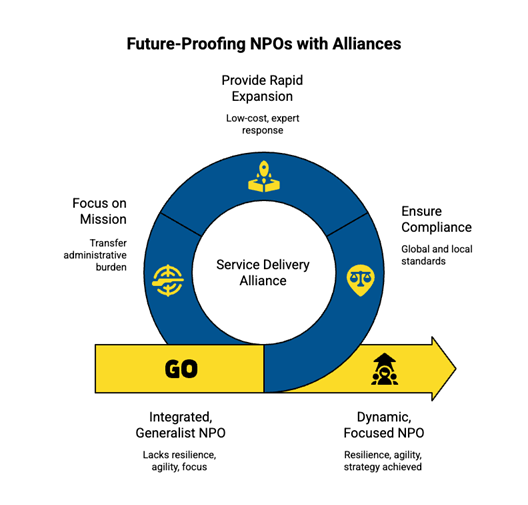
The most effective, structural solution to this reset is the strategic delegation of the administrative burden. Leaders must seek to make costs as variable as possible including considering the prudent delegation of high-risk functions to experts.
At BMG Partners Inc., we do not just consult; we execute the work for you. We become your fully integrated, multi-jurisdictional back-office team, providing the foundation for integrity that Funders now demand:
· Guaranteed Compliance: We manage the complex variations in local tax, payroll, and labour law across all your operating countries.
· Operational Execution: We take the administrative chaos: Accounting, Tax, HR, Payroll and Procurement off your team's desk, ensuring meticulous, audit-ready execution every day.
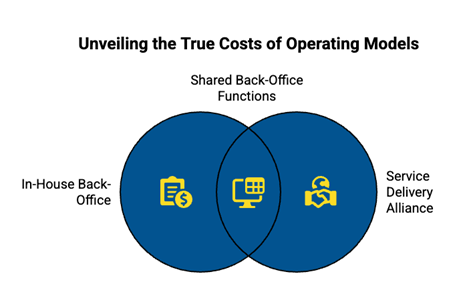
· Cost Efficiency: We replace fragmented, duplicated administrative staffing with a standardised, technology-driven model that directly increases your proportion of funds spent on core mission delivery.
The opportunity in this crisis is to move past the struggle for survival and build a resilient, efficient, and auditable organisation fit for the future.
Call to Action: Where do your operational risks lie? Do you know precisely where your administrative costs can be safely and prudently reduced?
Take the Shared Services Suitability Assessment today. This confidential, objective tool will give you a clear, immediate analysis of your organisation’s operational readiness and identify where shared services can best protect and propel your mission.